
Sali İgbal Ferad
Installation artist and live visual performer
- Background
- Digital practice since the mid-1990s; software-repurposing aesthetic spanning interactive CD-ROM, web-based poetry, video mapping, and live sensor work
- Current Focus
- AI as ingredient and gap-filler within human-led conceptual practice; real-time audience-responsive systems
Executive Summary
Sali İgbal Ferad represents the pragmatic digital artist's position on AI: embracing its democratising power while remaining clear-eyed about what it costs. With over a decade of practice both with and without AI, he offers rare comparative perspective. His philosophy centres on idea over execution, and AI, however capable, does not change that hierarchy.
If there's a good idea in the work, this drives me very positively.
What AI does change is access. Sali sees the technology as having fundamentally opened creative practice to people previously locked out by technical barriers, while quietly eroding the experiential knowledge that struggle used to build. His approach is neither resistant nor fully surrendered. He uses AI as ingredient and gap-filler, like adding yogurt to make a dish work, maintaining conceptual ownership and final curation while delegating technical execution. The result is a model of integration that is fluid without being uncritical.
Idea Over Execution
Sali's foundational position draws on art history rather than AI discourse. Andy Warhol's Polaroids, Yves Klein's blue paintings, Duchamp's readymades; the execution method has never been the measure of artistic value. The conceptual move is what carries the work.
Was it Polaroid art? We didn't see it as art. But someone came out and said this is art.
This gives him equanimity about AI that others struggle to reach. If the idea is strong, the method of realisation is secondary. If the idea is weak, no tool, AI or otherwise, rescues it.
His concern is not that AI will replace artists but that it may quietly replace the struggle through which artists develop judgement.
When you need to create a moon phases visual, you work in After Effects, study all phases individually, layer them. While doing this, you learn at least 35 additional pieces of information. With AI, this learning disappears.
The efficiency gain is real. So is the loss. What gets bypassed is the accumulated, almost unintentional knowledge that builds a practitioner over time.
The Rote Installation
His Art Basel Miami commission with architect Zeynep Arolat demonstrates his philosophy in practice. The conceptual foundation drew from quantum mechanics' observation principle. Like Schrödinger's cat, a building becomes meaningful only when inhabited.
A space is given meaning by the people within it.
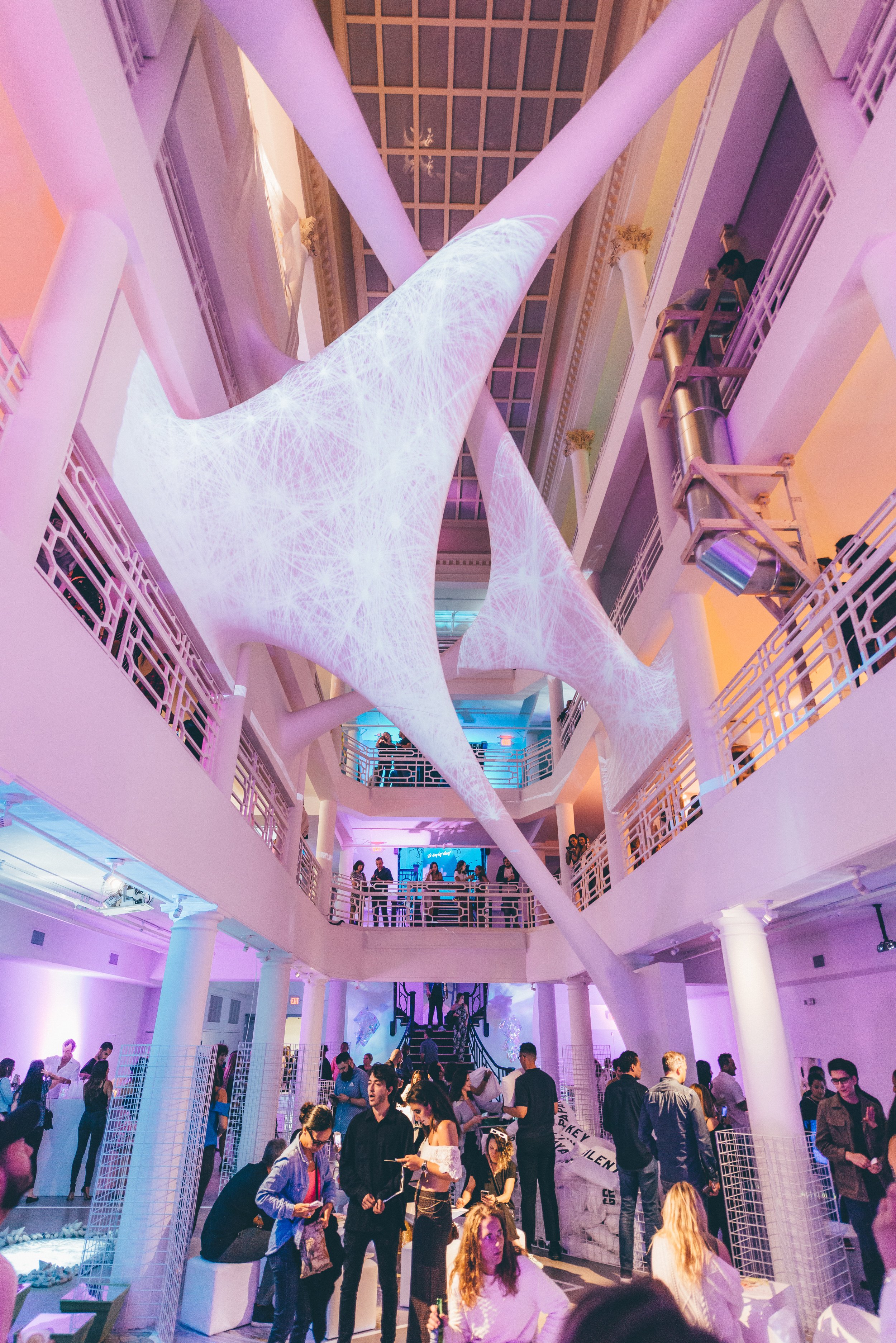
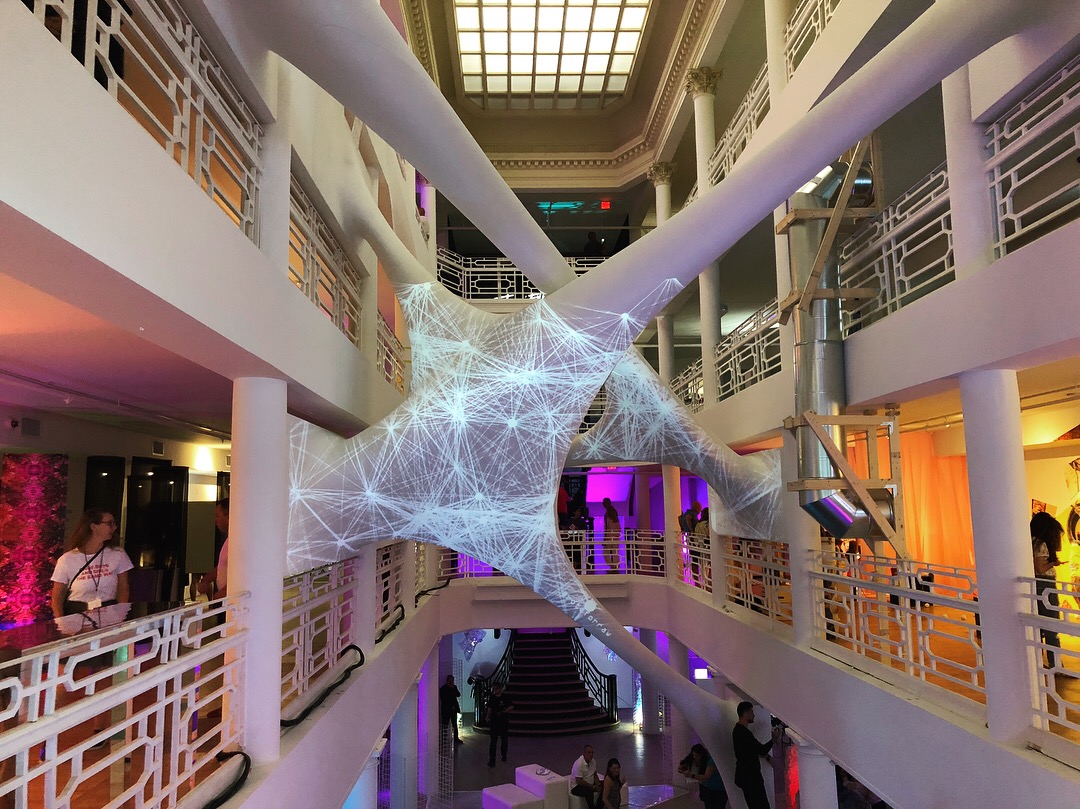
The technical architecture made this literal. Motion sensors tracked occupancy at building entrances and exits. Real-time data converted human presence into dynamic dot visualisations, each person a point, with connections forming between all present individuals and complexity increasing with density. At specific population thresholds, the system triggered factual displays focused on women's rights, with statistics about partner-related femicide appearing when matching numbers of people were present, fusing human presence with awareness of global injustice.
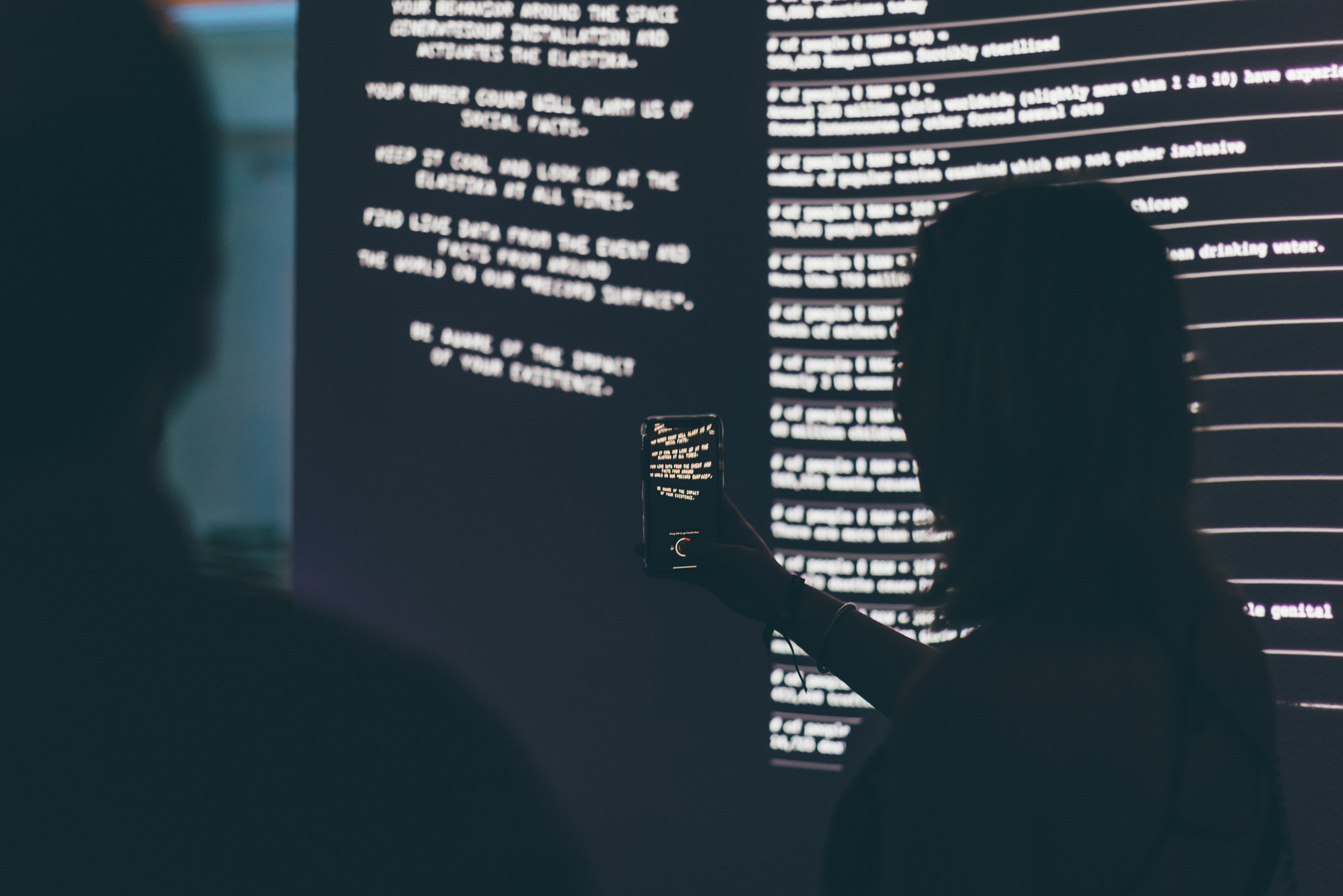
The project exemplifies his broader methodology: technology and data in service of a human idea, not as spectacle in themselves. AI was not the point. The building's relationship to the people inside it was.
Live Performance and the Present Moment
Sali's live visual practice operates through real-time responsiveness. Music drives the work, but so does audience energy and crowd dynamics. Energetic dancing triggers faster, rhythmic visuals. Empty floors call for calmer imagery.
I love doing live, instantaneous things. Creating live, real-time content is what makes me happiest.
His signature hand motifs appear across performances as personal aesthetic continuity, recurring like a musician's recognisable phrasing. The practice is genuinely improvisational. When a painter named Gamze appeared at one performance with an iPad, Sali integrated her live drawing as a visual layer on the spot. The iPad then circulated among dancers, and the audience became co-creators.
This capacity for spontaneous adaptation, treating accidents as creative opportunities rather than problems, defines his approach to collaboration, human or machine. His aesthetic decision-making resists formula. He prefers to act according to his own sense of when something is enough, rather than working from specific rules. The same instinct governs his AI use: not systematic deployment but contextual judgement about when it serves the work.
AI as Ingredient, Not Author
Sali's current AI integration is deliberate and bounded. He uses it to generate components, a galaxy texture, a background element, which he then modifies, colours, and composes into larger human-directed systems. He might take a generated galaxy, add something on top, change its colour, place a ship passing through, but draw where the ship goes himself. The AI produces material. He produces meaning.
He is candid about the tension between AI's generative surprises and his own directorial vision.
Sometimes AI creates something much more beautiful and creative than you can imagine, but it's not what you wanted. There's a fine balance between catching what you want and producing something beautiful.
He holds that tension rather than resolving it in either direction. He does not force AI to replicate his mental image exactly, and he does not surrender to whatever it produces. The negotiation between intention and emergence becomes part of the practice.
His future vision for AI is as sophisticated provider rather than partner. He imagines describing a feeling at full complexity, joyful but dark, with subliminal messages against fascism, celebrating queerness, hidden images, and having AI prepare a three-hour video to match. Within three years, he predicts, the technology will reach that point. The human provides conceptual direction at full complexity. AI executes at scale. That division of labour, he suggests, is both realistic and sufficient.
Democratisation and Its Discontents
Sali is unambiguous that AI has transformed access to creative practice.
Previously being multidisciplinary was very important. Today with AI, we're all multidisciplinary.
Code that took three months now takes minutes. Jingle production that required expensive studios now takes five. The barriers that once separated practitioners by technical skill have largely dissolved. But democratisation creates its own problem: saturation. What was novel becomes standard. Digital interactive effects that once felt cutting-edge no longer impress, because everyone has access to the same tools.
His response is to lean into the things AI cannot easily provide: organic material, personal photography, and above all narrative.
When everyone can create the same thing, making it with your own hands becomes more valuable. Having an authentic and original story becomes much more important.
He draws the historical parallel himself. The controversy over electronic keyboards in 1990s music, initial rejection followed by entire genres that could not have existed without them, maps cleanly onto current AI anxiety. He is not one hundred per cent against AI, and not one hundred per cent for it. That balance, held without false resolution, is perhaps his most instructive position. The work continues, the tools change, and the question that remains is the same one art history has always asked: was the idea worth making, and did the maker know enough to know?