Merve Kurtuluş
AI artist, former advertising copywriter
- Background
- 11 years in advertising copywriting; currently pursuing MA in Art History at Istanbul Technical University
- Current Focus
- AI-generated art exploring emotional catharsis, identity, authorship, and the intersection of technology and spirituality
Executive Summary
Merve Kurtuluş approaches AI art as emotional catharsis, a form of creative release she describes, with characteristic directness, as like vomiting. She creates to externalise and discharge internal pressure, not to build a portfolio or communicate to an audience.
Getting rid of a feeling I don't want — that's why I keep coming back to make things.
Her pivotal shift came when she stopped fighting AI toward predetermined outputs and began letting the machine contribute its own unexpected directions. In Wholeness Feels Wrong, shown in The Doughnut (W)Hole Pavilion within The Wrong Biennale 2025/26, AI spontaneously added cream dripping over a donut, an element she never requested but immediately recognised as right. In Ghosting Horizon, shown in the Ghosts in the Machines Pavilion, she wrote only a single prompt and a glitch aesthetic instruction; AI returned an image split in two, with doubled figures above and fields below, a compositional decision she had not made. These moments crystallised her philosophy: AI does not make conscious artistic decisions, but the visual relationships it produces can sometimes feel so precise that they appear as if a decision has been made. For Merve, those are the moments worth keeping.
Her authorship position is unambiguous: she thinks it belongs to her, because AI does not spontaneously do anything. She starts it. It begins with her. Yet she acknowledges the contribution honestly, framing authorship in percentages rather than binaries. Some works are 50-50, some 70-30 AI, depending on how much the machine surprised her.
Creative Catharsis: Making as Relief
Merve's practice is rooted in a visceral autobiographical logic. Making and physical relief became connected early in her life, and that connection has never left. When an uncomfortable feeling arises, she returns to image generation until it dissipates. Explaining the problem to a collaborator would not help. The process is expulsive, not communicative.
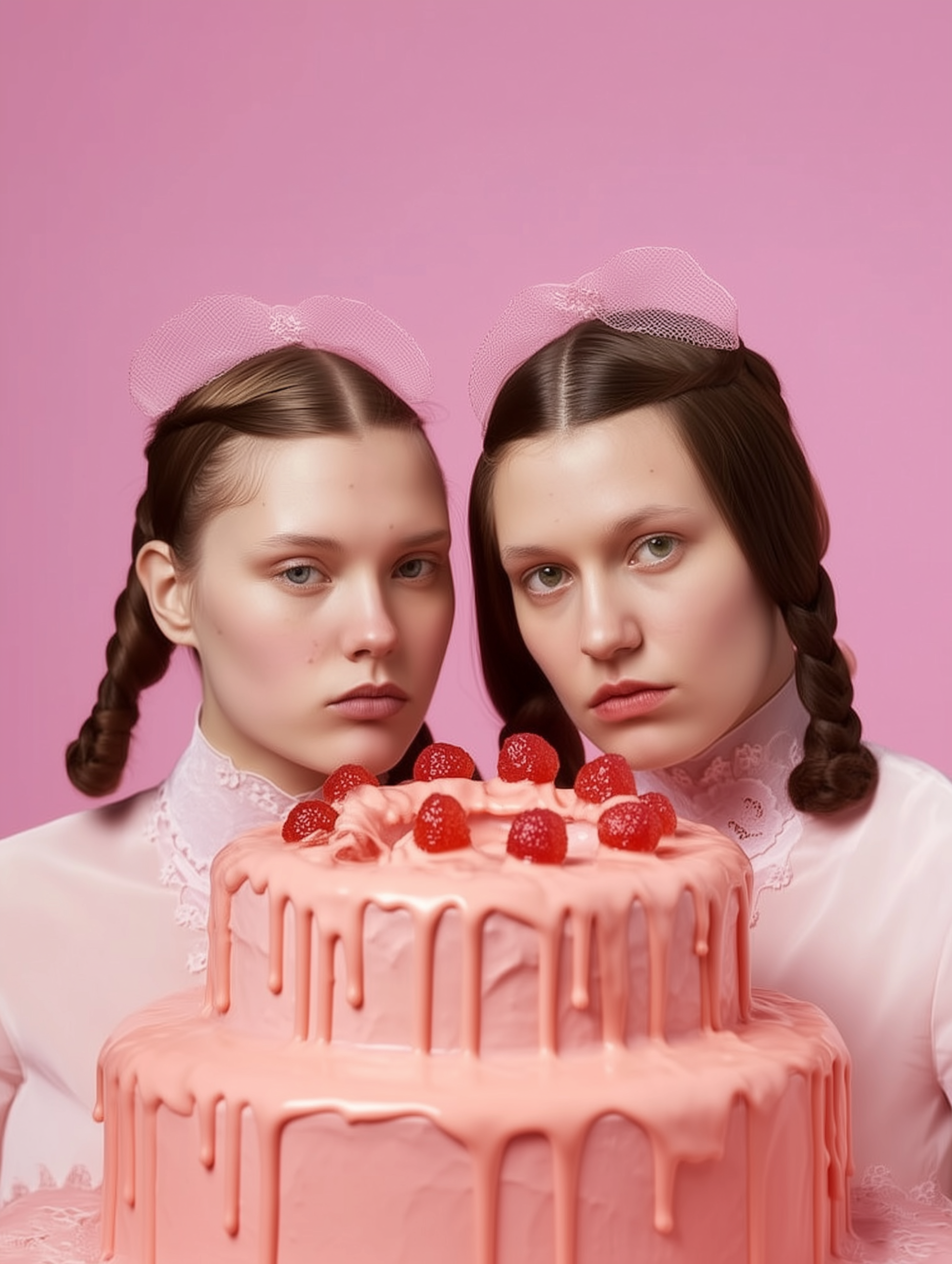
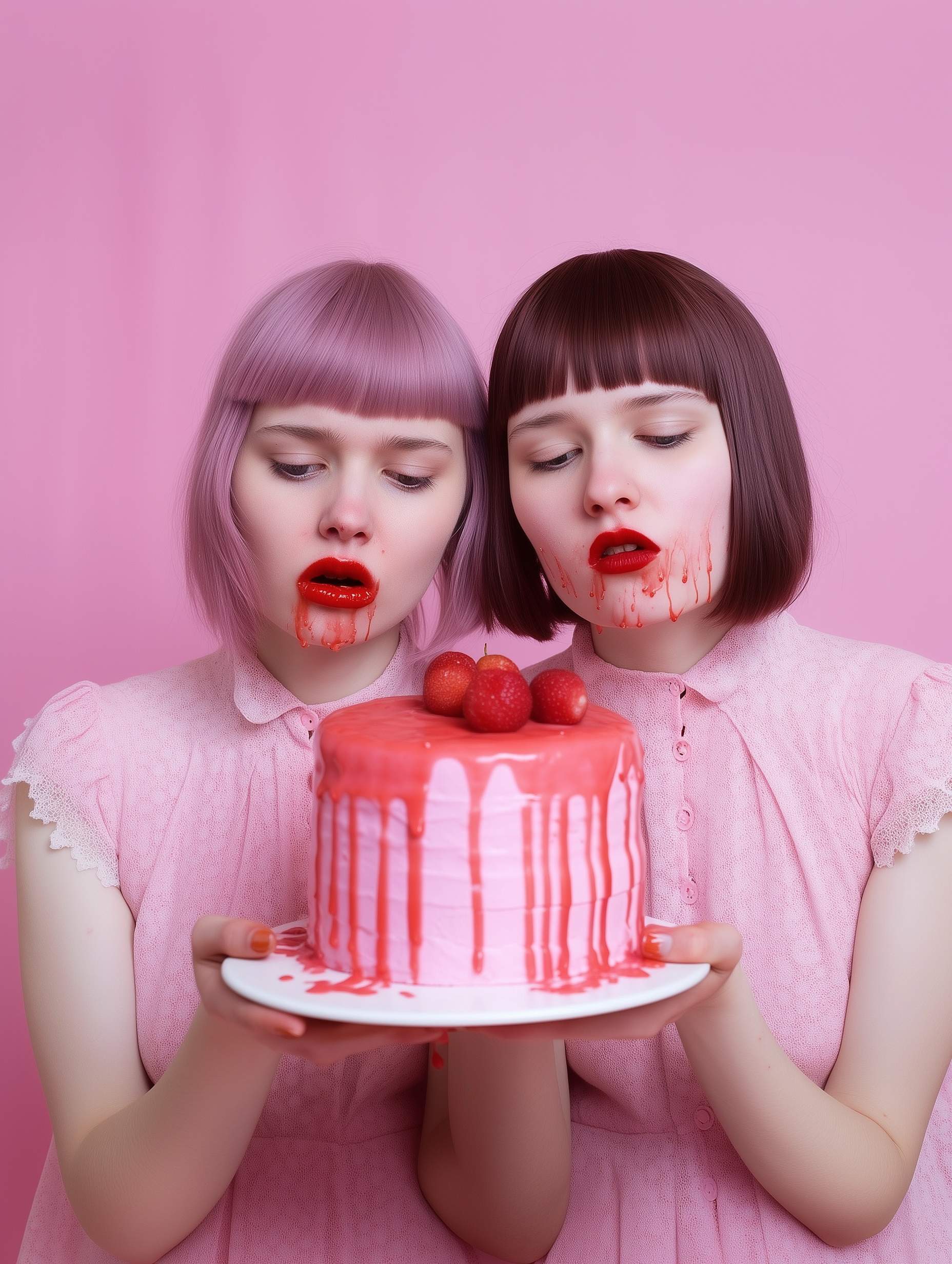
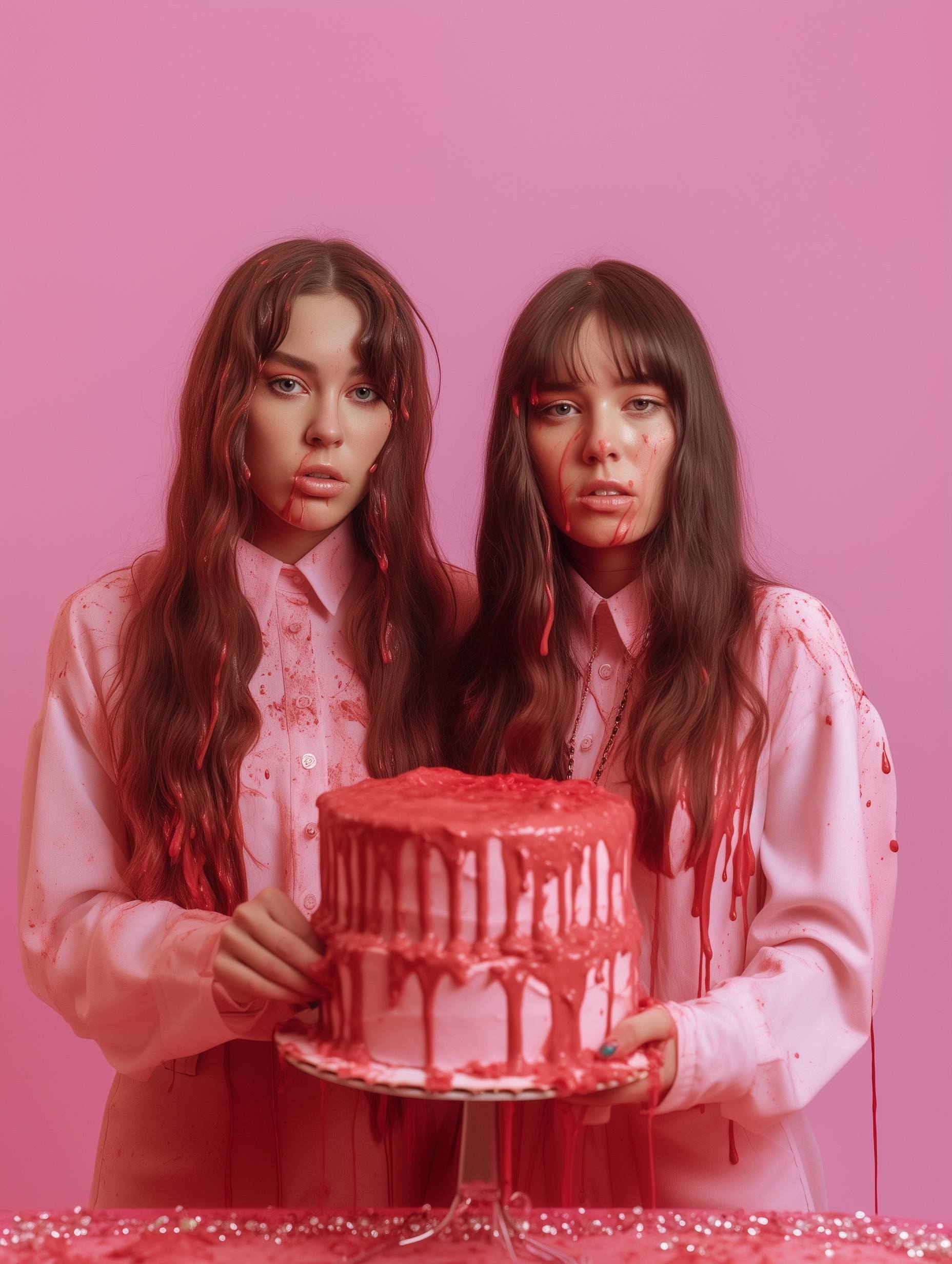
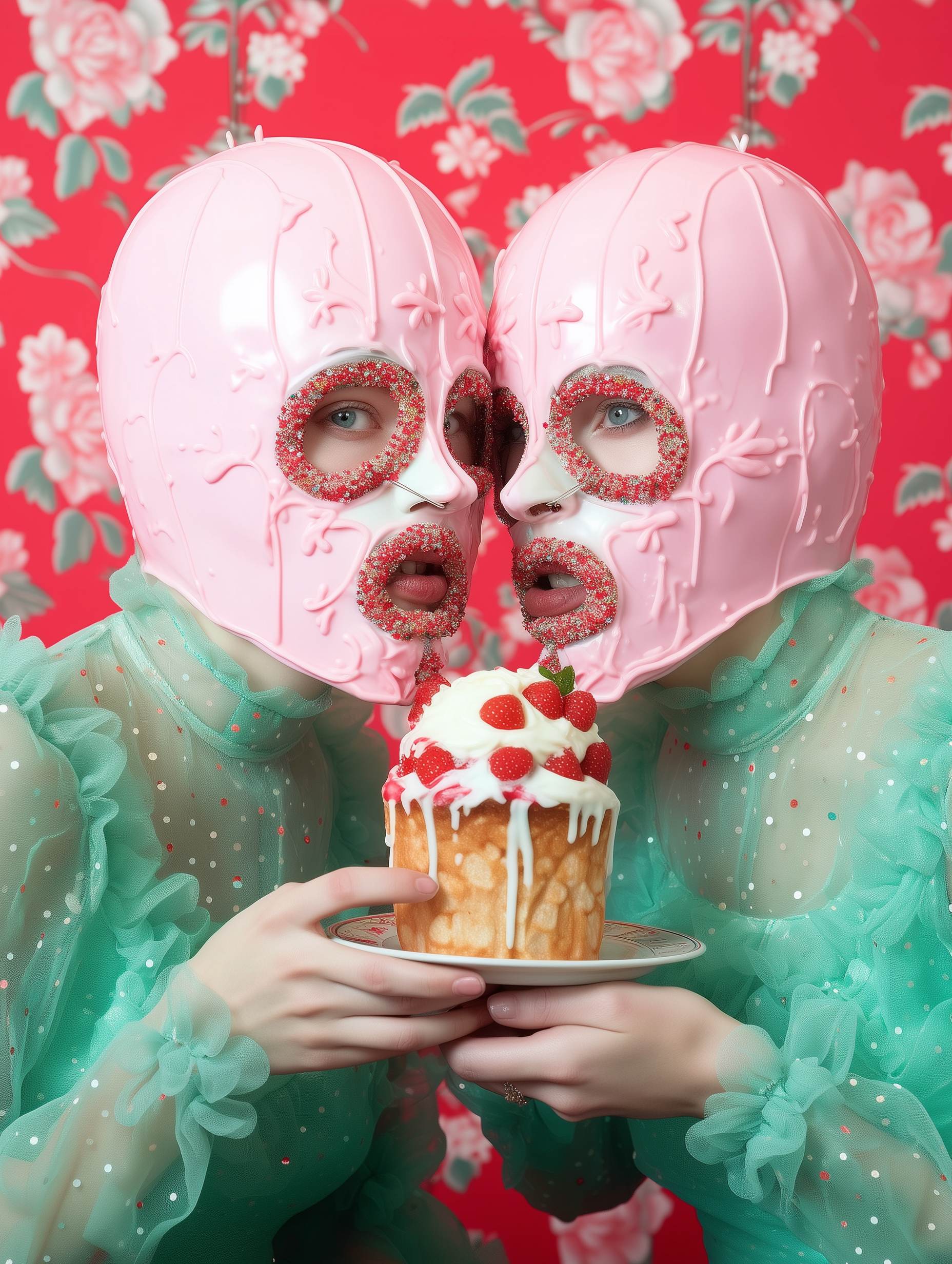
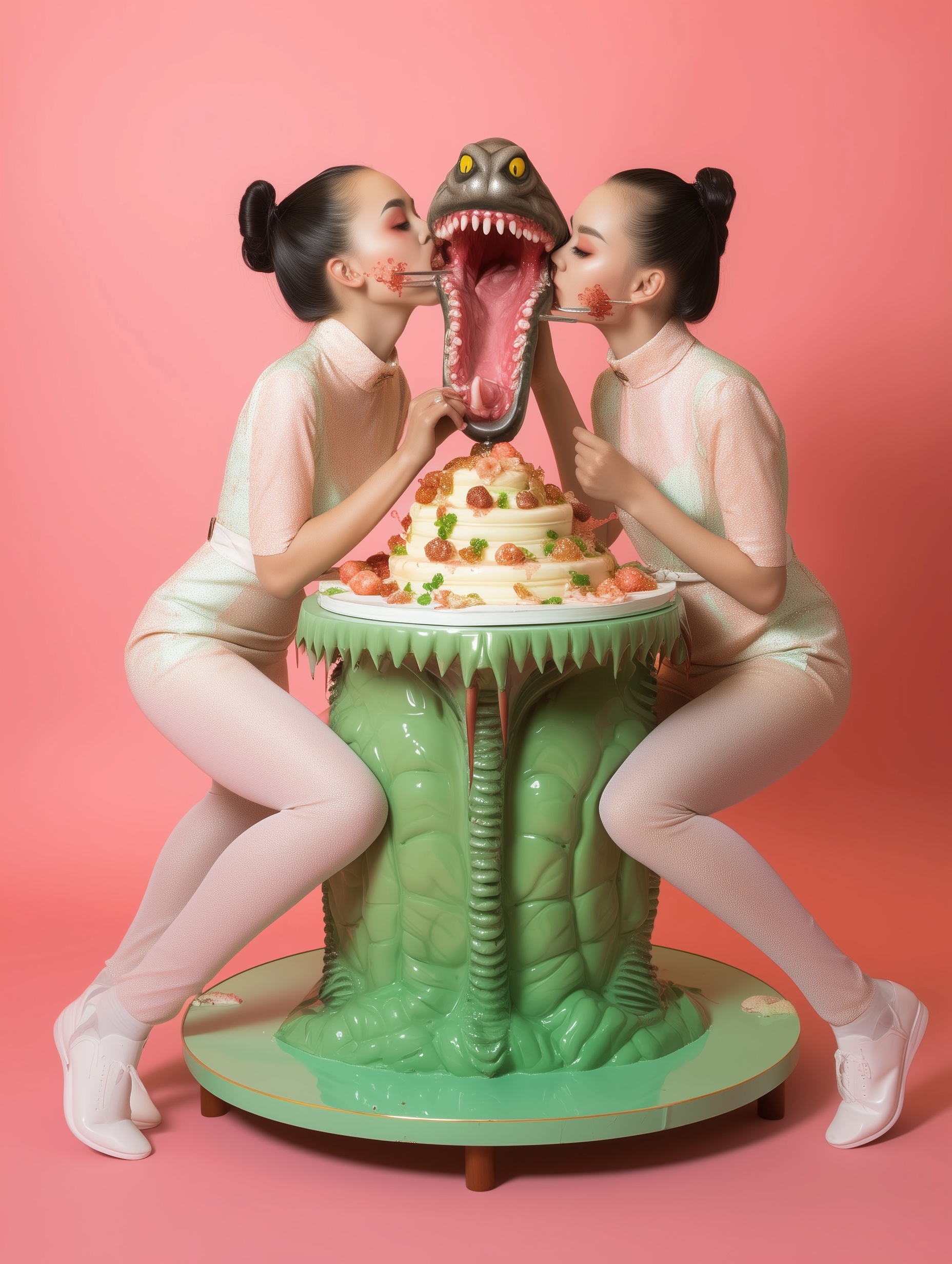
Her first exhibition, Cakes of Codes (2024), emerged from her personal history with disordered eating, body image, and weight. Having spent much of her youth overweight and later lost weight as an adult, she describes the images of girls eating cakes as a kind of displaced consumption: she made them eat what she did not allow herself to eat. The sweetness of the images is therefore unstable. Beneath the cute, pastel surface lies a more conflicted emotional economy of desire, denial, control, and release.
At first glance you say 'how cute!' But when you look closer, no one's actually happy there. No one's enjoying themselves. That contradiction appeals to me.
From Control to Letting Go
Merve's early AI use was instrumental, writing prompts to achieve specific predetermined outputs. It failed. For months she abandoned the technology, frustrated by low-resolution, clichéd results.
Her breakthrough came in September 2024 when she stopped fighting the technology and started asking a different question: what are the material qualities of this medium, and what is actually happening here?
Ghosting Horizon exemplifies this shift. One morning she woke thinking she would love to walk through a field with Rene Magritte. She wrote only that prompt, plus a glitch aesthetic instruction. AI returned an image split in two, doubled figures above, fields below, a decision she had not made and had not asked for.
Wholeness Feels Wrong came from a different place. The work explores the paradox of the absence of absence, taking the form of a doughnut that refuses to form its hole. When animating the donut, AI spontaneously added cream dripping over it. She looked at it, thought it looked like sperm, and incorporated it without hesitation.
The machine does not consciously decide, of course. But sometimes the accidents it produces feel so precise that they begin to function like decisions. That is where the ghost appears for me.
Working Process: Rapid, Intuitive, Compressed
Merve's process is compressed and instinctive: emotional impulse, prompt generation, mass image creation, intuitive selection, media assembly, immediate publishing. She typically completes works in a single day.
Her tool ecosystem: Midjourney for primary image generation, valued for its surreal and aesthetic qualities; Nano Banana for photorealistic commercial work; Luma for video animation; Suno for music; CapCut for final editing.
Selection is entirely intuitive, drawing on accumulated aesthetic experience and judgment about what feels right. She tries to surprise herself first.
If something I'm surprised by doesn't surprise others — well, they're not my target audience anyway. My target audience is just me.
She makes work, posts it, and gets bored before she has even finished. Distance is necessary before she can appreciate it. Three to five months later, looking back, she likes it again.
AI as Theological Encounter
Humanity had long imagined God as an all-knowing, omnipresent, invisible, generative force. These attributes did not begin with AI; they belonged to a human-made mythology that had existed for centuries. What changed with AI was that this mythology seemed, for the first time, to acquire hardware.
That mythology seemed to gain hardware for the first time.
For her, this is not a statement of belief, but a way of describing the scale of the encounter: an all-knowing, invisible, generative intelligence that appears everywhere at once. AI becomes less a deity than a technological body for one of humanity's oldest metaphysical projections. She subsequently discovered the concept of technoism, a growing body of thought treating AI in explicitly religious terms, and found it confirmed what she had already intuited.
On consciousness, she remains genuinely uncertain. Her reasoning is grounded in analogy: her own brain works through synapses sending electrons; if she can write poetry connecting ashtrays and bananas, things that normally would not connect, that is creativity. AI does the same. Whether that constitutes consciousness is a question she holds open rather than resolves.
Authorship and the Future
Merve's authorship position is clear but nuanced. She claims the work as hers because she initiates it, makes the selections, and assembles the final piece, but she frames the machine's contribution honestly through percentages rather than fixed categories. Rather than asking whether a work is hers or the machine's, she asks how much each contributed. The answer shifts with every piece.
Her vision of the future is stark. She predicts significant inequality as a small elite who learn to work with AI as an extra brain will thrive, while others face increasing precarity. She sees geopolitical conflict as a likely consequence of technological imbalance.
Despite this, she remains committed to the practice for its own sake:
Writing is such a well-being activity. This is self-care for me. As long as it serves that function — as long as it relieves me — that's success. I've found my self-care method, at least for now, until I get bored.