
Hurol Inan
Creative writer, essayist on Substack
- Background
- A year of twice-weekly Substack publishing; previous book project, The Tall Person with Height (2023); current book project on coincidences
- Current Focus
- Essay and story writing combining personal narrative with rigorous research, with an AI-assisted workflow built for speed and validation
Executive Summary
Hurol Inan occupies the pragmatic middle ground on AI integration. He neither dismisses the technology nor surrenders creative agency to it. After a year of publishing twice weekly on Substack, he has developed a workflow that reduces production time from days to two or three hours while maintaining what he considers his authentic voice. The key to this is sequence. He never starts with AI. Everything begins with handwriting, fountain pen on paper, using automatism techniques borrowed from the surrealist movement.
I write on a piece of paper first because I don't want to worry about editing. It's about flow. Sometimes I don't believe the sentences I'm writing. It's like talking to myself. If I was writing it on keyboard I don't think I could write it.
AI enters only after this generative phase, for research, light editing, fact-checking, and tone adjustment. His instruction to the system is consistent: edit lightly. He is careful that the work remains his at the end, and pushes back firmly when ChatGPT tries to change something more substantively than he wants.
His most revealing moment came when he asked ChatGPT to structure an essay on luck. Following its framework felt wrong. He felt channelled into areas he did not want to go, abandoned the AI-structured version entirely, and rewrote from scratch. Yet for five theoretical chapters in his coincidences book, on chaos theory, network sciences, and serendipity frameworks, he let ChatGPT write them with full disclaimers. The distinction is clear. Personal narrative must be his. Technical exposition of established theory can be AI-generated if disclosed.
The Fountain Pen and the Flow State
Hurol wakes with ideas already formed. Sometimes they arrive as complete prompts ready for development, sometimes just as urgency. On days without concrete ideas, he maintains his ritual anyway: looking at the sky, making coffee, sitting with his fountain pen, writing whatever emerges. He uses automatism from the surrealist movement, sometimes starting with "I've got nothing to write today" and ending up with pages.
This handwritten practice is not romantic nostalgia. It is deliberate cognitive architecture. The physical-digital boundary protects flow state from premature refinement. The pen produces something the keyboard does not: sentences he does not feel he is consciously writing, words flowing without conscious control. Notebooks are everywhere. Ideas migrate to Google Keep, digital consolidation after analog capture. He maintains a tentative publication plan that frequently gets disrupted by urgency. A story about nose size was not planned until the week it was published, but it jumped the queue because it became urgent.
From Observation to Research
The nose story exemplifies his method. Cycling in Spain, someone commented that people there have big noses, adding the familiar innuendo about what big noses supposedly predict. He smiled, tired of hearing it. Simultaneously he remembered a friend's rhinoplasty story, two sisters looking similar because the same surgeon had created their noses rather than because they shared genetics.
This triggered questions. Why are people fascinated by nose appearance? Turkey has high rhinoplasty rates. Is there any empirical evidence for the innuendo? He researched the question, found nothing, just urban myth, and turned the piece into a myth-busting opportunity. Without research capability, the story could not have been published.
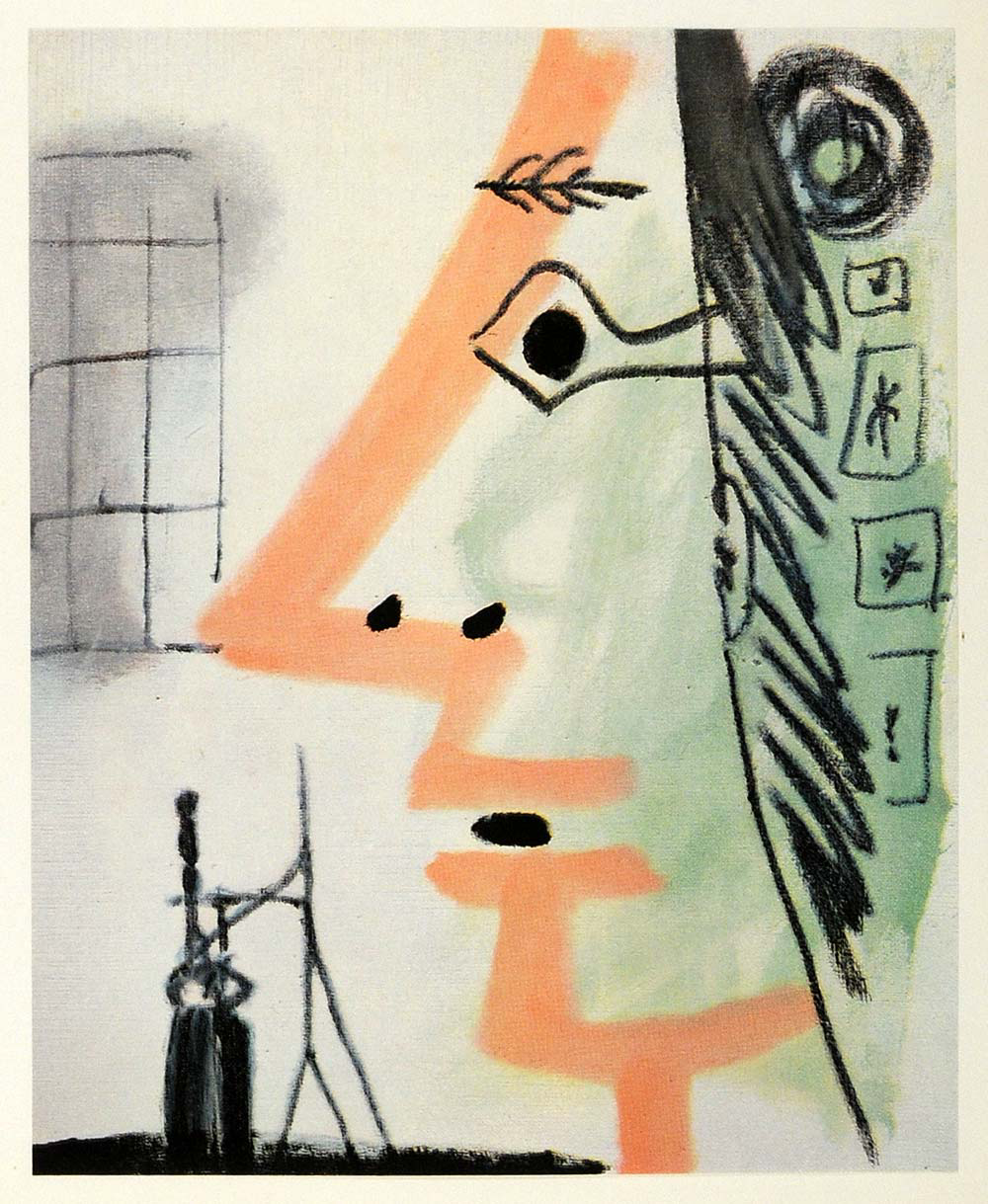
The nose story probably without the research couldn't add up, wasn't going to add any value. Before AI I probably wouldn't have published that.
Before AI, he would have looked briefly at Google Scholar, perhaps found something quickly, and if not, simply described the funny experience. Now, using Deep Research, finding credible information takes fifteen to twenty minutes. What would have taken days now takes two or three hours total.
Research Acceleration and Its Blind Spots
Deep Research is his most enthusiastic AI adoption: detailed investigations with proper references, credible enough for his purposes. His verification process involves asking further questions and iterating through multiple queries to triangulate accuracy.
Yet his coincidences book revealed AI research's fundamental limitation. Initial queries about coincidences surfaced spiritual and religious frameworks he found unhelpful. The breakthrough came not from AI but from a party conversation with a Sydney University philosopher who taught chaos theory and studied coincidences. This led him to chaos theory as an explanatory framework, something ChatGPT had not surfaced directly.
What comes out as authoritative does not mean it is complete. Unless you ask the right questions you can't discover alternative theories.
AI surfaces authoritative information but lacks comprehensiveness without the right prompts. Non-AI information sources, conversations and serendipitous encounters, remain essential for discovering what you did not know to search for.
The Editing Partnership and Its Limits
After handwriting and typing, Hurol enters material into ChatGPT, asks validation questions about specific claims, then edits piece by piece, picking paragraphs and asking how they could be tightened, whether they read clearly. He assembles revised sections, then does a final pass for tone and style.
His critical instruction throughout is to edit lightly. There have been times when ChatGPT wanted to change more, restructure, rephrase wholesale, and his response is firm. The work has to remain his at the end. During editing, AI does not surprise him or add information. It removes unnecessary words, suggests alternatives, makes content more readable. It does what editors do, not what co-authors do. What makes the work his: the idea, the composition, the stories, the style, the humour. What is not his: the research material itself, though he chooses what to include, and the editing assistance.
He also deploys persona-based critique, asking AI how a legal professional or a CFO would read his work, whether it addresses their concerns. This simulates specialist review without requiring actual expertise, making the writing more robust across different readers.
The Structure Experiment That Failed
For his coincidences book, he asked ChatGPT how it would structure an essay on luck. It gave him a framework. He tried writing within it. Then he stopped.
It's not mine and I feel kind of channelled into an area I don't want to go. With human collaboration you discuss and negotiate. With ChatGPT there is no such thing.
He had wasted time, but he changed the structure completely and rewrote from scratch. The problem was not just that he disliked the output. More fundamentally, the work did not feel like his. Agency and authorship were the issue.
Yet this same writer, for five theoretical chapters on chaos theory, network sciences, and serendipity frameworks, let ChatGPT write them with full disclaimers. His justification is straightforward. He is not in a position to write about chaos theory. It is not his expertise. He can use it to ground his work, but he cannot author it himself.
This creates a three-tier authorship system. Core work, the personal stories and original insights, is entirely his. Research is AI-assisted but human-curated. Theoretical exposition can be AI-written if disclosed. Transparency resolves ethical concerns that capability alone cannot address.
Writing as Well-Being, Readership as Problem
Despite his successful integration, Hurol is increasingly concerned about readership. As AI enables mass content generation, attention fragments impossibly. More problematically, people who write have less time to read.
Readership is a problem. In general people aren't reading anyway, and with ChatGPT we might lose that agency of reading as well. It becomes too cluttered, too much stuff out there.
Yet he maintains surprising optimism about AI writing proliferation. Writing, he notes, is a profoundly therapeutic activity. The first thing a psychologist suggests is to keep a journal. Much Substack content is people sharing their journals: self-help, recovery from difficulty, finding inspiration. The activity is healthy regardless of audience size. The audience question is real, but it does not invalidate the practice.
He writes for himself, not a particular audience. He is grateful when people read but does not limit himself based on what others might think. Writing, in his framing, is selfish in a useful way: he does not write to receive feedback, and he does not want to limit himself based on others' potential reactions. This selfishness becomes a sustainable creative philosophy when freed from validation-seeking.
He can spot AI-written essays, the voice that goes on without saying much. But he is suspicious about his own work too, wondering if readers can tell it has been edited. Even maintaining humour and style, the boundary uncertainty persists.
On AI Consciousness and Creativity
Hurol's scepticism is sharp. When scientists claim AI has consciousness, his response is to redirect the question. Just ask those scientists to explain consciousness in the first place. We do not really know. We have speculative information but no certainty, even about our own.
Can AI be creative? He does not think so. It can do things, but not what we call creativity. It mimics, takes from templates, recombines. Genuine creativity, in his view, comes from somewhere we still do not fully understand.
As humans we don't create based on logic but on other things we don't fully understand physiologically. The human mind is remarkable.
He emphasises that AI is much bigger than generative AI. Generative AI specifically is mature now, moving into the adoption phase. Other aspects, including machine learning, language processing, and predictions, will continue to evolve. But neuroscience insights must inform AI development. Assuming current architectures already achieve human-level consciousness or creativity is, for him, a category mistake. The fountain pen, the conversations at parties, the ideas that arrive on waking; these are still where his work begins, and where authorship lives.