
Gemma Reidy
A successful adapter who prospers within AI workflows while questioning where they are taking creative practice
Brand, visual, and motion designer; AI creative practitioner
- Background
- Fine art, graphic design, branding, and packaging; 20+ years experience across major agencies and brands
- Current Focus
- Blending traditional design skills with AI tools for client projects
Executive Summary
Gemma Reidy came to AI early and by accident. In 2022, before most of her industry had heard of Midjourney, she was sitting on her sofa experimenting with it. The encounter was unhurried and unstructured, shaped by curiosity rather than a brief. That informality matters, because it gave her something most practitioners now lack: intuitions about AI's affordances built through direct manipulation rather than tutorials.
I just used to sit on my sofa and play around with it, see what it could do, what it couldn't do. So I learned very early on how it kind of thought.
Encountering the technology before its conventions hardened meant she could approach it as something to be understood rather than simply deployed. She watched what happened when she typed things into a box, iterating without pressure or deadline, building a feel for the system's tendencies, failure modes, and aesthetic defaults. As the models matured, that early literacy compounded.
Twenty years of design craft across branding, packaging, digital, and social media gave her the other half of the equation. By the time AI became a credible production tool, she was unusually well-positioned to hold both halves of the work simultaneously: the generation, and the post-production craft that determines whether generation becomes anything worth showing.
The Animatics Pilot and the Workflow It Established
The transition from hobbyist experimentation to professional AI practice came through a pilot project in 2024 creating animatics, the animated storyboards used to get advertising greenlighted, for a global brand. The work was entirely behind the scenes, intended to test whether AI generation, blended with traditional skills, could produce storyboards efficient enough to streamline the greenlighting process.
What the project established was the workflow Gemma now applies consistently. AI provides generative substrate; traditional craft provides the refinement layer. Generated frames require post-production to meet professional standards, which means removing artefacts, correcting elements that shouldn't be there, and ensuring the output holds up under scrutiny.
We might gen stuff out in AI but we'll craft it in Photoshop because the standards still have to be there.
The AI accelerates. The craft ensures quality. Neither alone produces the result. From this foundation, her work expanded into animated videos for clients across sectors, with her focus consistently placed on striking a balance between design skills and the way AI feeds into them in the best way possible for the client.
A Medical Client and the Question of Quality
Gemma's most instructive project involves a medical business historically limited to corporate imagery: navy blue, standard, functional. The aesthetic possibilities had been narrow for years, fixed by what the production budget could absorb. AI integration changed what was possible within that same budget without changing the standards of execution.
What they've been able to do is experiment far beyond what they would have done previously, because now they can do it within budget.
She is careful about what this gain does and does not represent. Compensation has not been compressed. Quality has not been degraded. The work is not being churned out on a punishing budget. The acceleration has enabled experimentation rather than compromise, opening visual ambition that had previously been priced out of the room.
This, she suggests, is closer to AI's actual usefulness in professional practice than either utopian or dystopian framings allow. The work gets more interesting; the standards stay the same.
Premium Protection and the Race to the Bottom
Her optimism about specific projects sits alongside a clear-eyed view of the broader industry picture. Gemma is conscious that her position with major brands and agencies offers a kind of protection that smaller practitioners may not enjoy. For premium clients, quality requirements create a floor that pure automation pressure cannot easily breach.
A lot of things that get associated with AI is that it's faster, it's cheaper, there's less of a skill set there. But for actual brands who have a lot at stake, that's simply not the case.
She recognises this protection is not universal. Broader industry dynamics continue to push toward cost reduction, and the resulting concern about a race to the bottom is one she takes seriously even from her own protected vantage. Awareness of structural precarity, held alongside personal security, distinguishes her from technologically determinist optimists. She is benefiting from current arrangements while recognising what those arrangements might mean for others working with less leverage.
Sustainability as the Tipping Point
When the conversation turned to sustainability, Gemma's register shifted. Her language thickened with repetition, intensifiers stacking up where her earlier responses had been measured and precise.
We're very soon coming very close to that tipping point of needing to examine the impact of how it is sustainable or not as it currently is.
The concern operates on several levels at once. Economic sustainability of creative practice as cost compression spreads. Professional sustainability of craft standards under pressure for faster, cheaper output. And the broader ecological and ethical questions about AI's resource demands. The intensity of her phrasing suggests emotional investment beyond professional assessment, a recognition that the trajectory under examination has stakes that go well past her own studio.
The Search for Purpose Beyond the Brief
Alongside professional success runs a quieter question. Gemma has reached a point where commercial integration is working, where clients are well-served, and where the work meets her own standards. The question of meaning, however, remains open.
Having a sense of purpose, what is that purpose, what am I giving to the world.
She wonders whether the more meaningful contribution might lie in teaching others to use these tools well, or in writing about the field's sustainability, rather than in the next deliverable. The AI transition has prompted technical adaptation and existential reconsideration in roughly equal measure.
This is what makes her testimony unusual. Successful adapters do not always voice doubts about the trajectory they are succeeding within. Her ambivalence carries weight precisely because it comes from someone for whom the current arrangement is working well.
Selected Works

This is a still from one of my first branded portfolio videos, and in July it will be two years old. What is interesting about this work is the tools have moved on considerably since I created it and yet, it is still the piece of work people are most drawn to. I think this points to the fact that technology evolves, but it is often the same things that people resonate with, such as taste, craft, and storytelling.
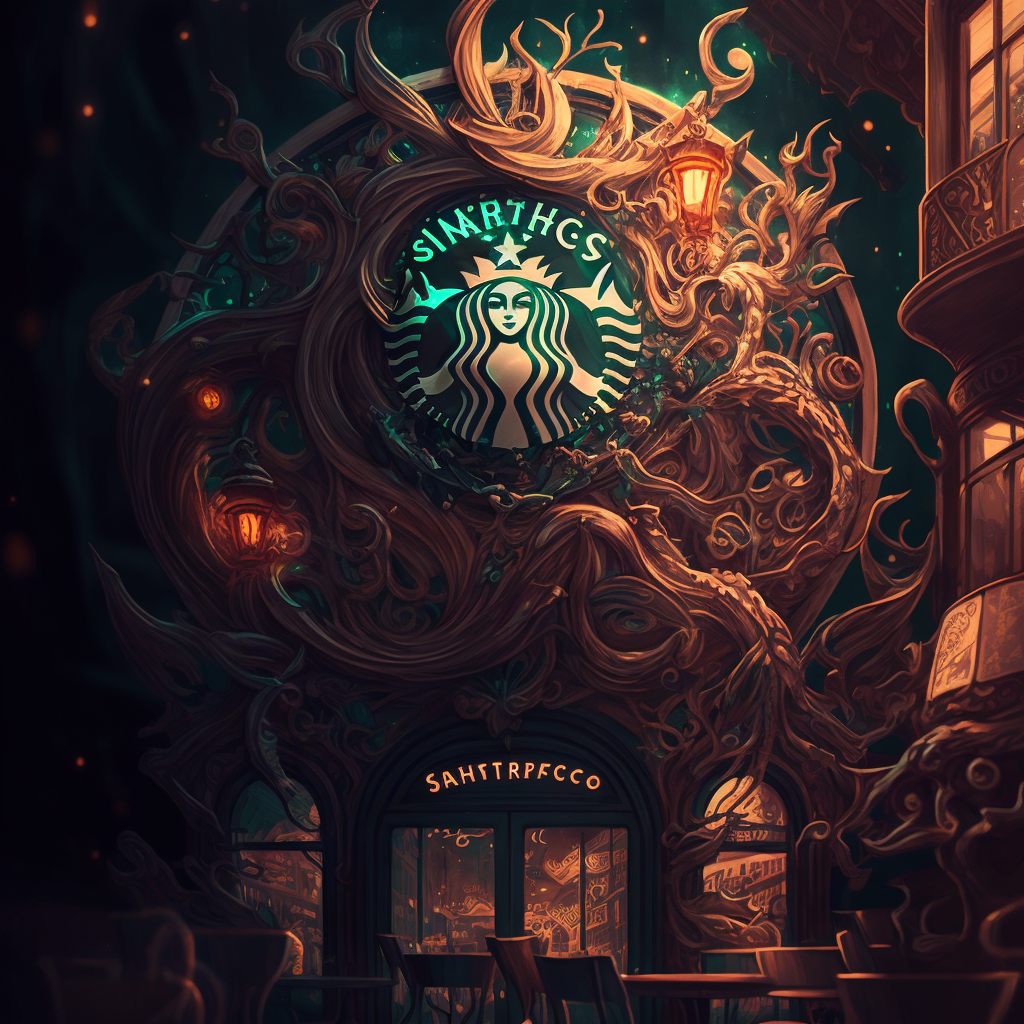
This was one of my first generations in Midjourney from 2022. At the time I wanted to create a surrealist Starbucks cafe. Obviously it is a failure and full of visual noise and mistakes, like text you cannot even read, but at the time it was very exciting to be able to type something into a box and produce an image, no matter how bad it was. There was something cathartic in the experimentation of those early days and the joy in being able to produce complete nonsense and that somehow be satisfying.