Boris Eldagsen
A photographer of the human condition who treats AI as the next medium for the same lifelong question
Artist, photographer, AI image and video creator, workshop teacher
- Background
- Twenty to twenty-five years of stage photography, video installation, and night photography
- Current Focus
- AI-generated imagery and video, teaching AI workshops, UNESCO World Heritage working group
Executive Summary
Boris Eldagsen has worked with the same preoccupation for fifteen to twenty years: the human condition, psychological states, the interior life. AI has not changed that. What has changed is the speed and texture of the work, and the tools available to pursue it.
My interest has not changed with AI. It is for twenty years the human condition, psychological approach. Often one work is leading to the next.
He approaches AI with the same immersive intensity he brought to night photography: reading newsletters daily, testing new models as they release, teaching workshops, and constructing keynotes from accumulated knowledge. The models he uses shift constantly. He goes where new capabilities open possibilities he did not have before.
His authorship position is clear and consistently held. He combines five to ten tools, involves extensive post-production, and treats generated images as starting points rather than finished works.
I consider myself to be the author because until the image is finished, there are so many creative decisions that are taken by me.
His sharpest insight concerns the difference between human-made and AI-made art. The difference is not quality but origin. Art comes out of biography, out of something that bothers a person and will not leave them alone. Humans have one life, one body and try to make sense of what they experience. AI can replicate the surface of this. It can simulate any biography, but it is not trapped in it.
From Night Photography to AI
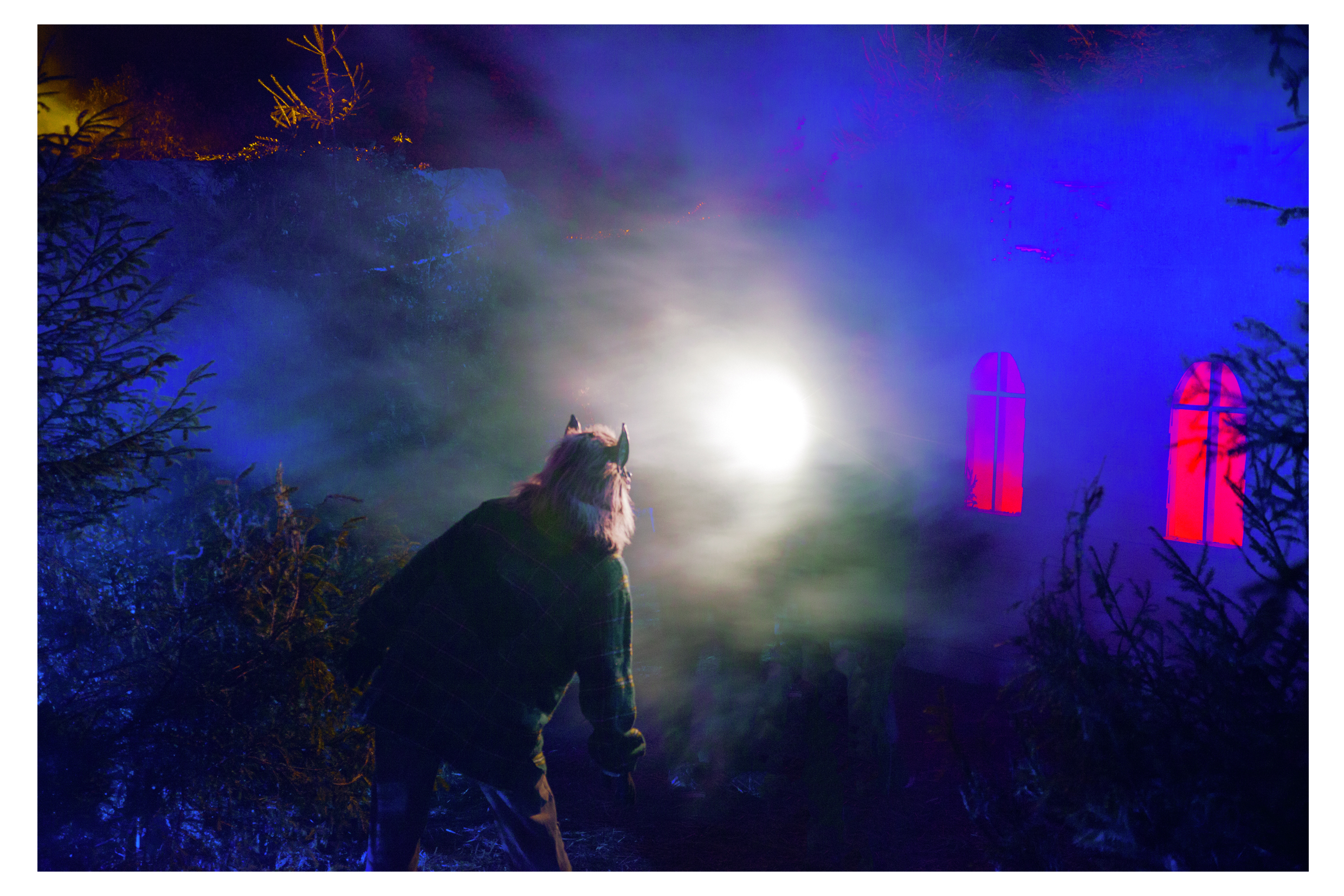
Boris's AI practice did not replace his photographic one; it extended it. For two decades he worked in staged photography and video, going to places at night where he knew there would be colour, people, and unpredictable events. He just turned up and reacted to what was there. One night Keanu Reeves was shooting John Wick with giant drones hovering over Museum Island in Berlin. Another night, people dancing tango to a CD player. Another, a silent disco in which the music was inaudible to anyone outside the headphones. None of it could be planned.
He sees the same quality in AI. The hallucinations he did not request, the biases that surface, the unexpected swerves; each becomes a creative decision about whether to keep what arrives or to push it away. The element of surprise, which he also found in an eight-year collaboration with an artist in Bangladesh blending photographs, collages, acid, and paint, is something he actively courts rather than tries to eliminate. That Bangladesh collaboration, where his role was identifying the strongest of twenty variations and adding the missing element, prepared him directly for working with AI. The editing process, he says, is just the same.
Tools, Models, and the Inpainting Breakthrough
Boris works across image and video generation, constantly evaluating which models offer genuinely new capabilities. For video he uses Runway intermittently, rates Seedance 2 as currently the strongest model, and appreciates Minimax for animation. For images, since September 2025, SeeDream 4 from ByteDance has become his primary tool, partly for its creative flexibility and partly because he now has API access allowing him to set the safety filter to minimum for post-production work. For post-production he also uses Nano Banana Pro and ChatGPT Image 2.
His preference for Chinese models over American ones is practical rather than ideological. American models are heavily censored in ways that are sometimes inexplicable. Children cannot be generated, nudity is problematic, refusals do not always make sense. Chinese models are less restrictive, which matters for work exploring psychological and human condition themes that often require depicting vulnerability, suffering, or the body.
The inpainting breakthrough matters because roughly forty per cent of his image creation involves editing and refining generated images rather than just generating them. For three years, no available tool met his standard. SeeDream 4's prompt-editing approach finally does.
There are tools that do exactly what I would like them to do, giving me more artistic freedom.
Text Prompting as Craft
Boris considers himself skilled at text prompting, specifically at working around censored keywords and convincing models to produce what they would otherwise refuse. His first project with DALL-E 2 was built entirely around this: generating images using words the model would later refuse in inpainting, by convincing it to produce them in the first place.
I always loved to play with elements in a text prompt that are from different universes and have them clash. This is where the knowledge and experience of the person using AI comes into play.
He acknowledges the skill is becoming obsolete. Text prompting is increasingly outsourced to language models or replaced by image and video references. Most people starting today will not develop it. Surprisingly text prompting now gets a revival: Prompt Editing (inpainting without masks but words) requires a precise language.
Authorship and the Statistical Average
Boris's authorship position rests on a specific argument: the older and more experienced the practitioner, the more they can extract from AI beyond its statistical defaults.
The advantage of AI is that the older you are, the more knowledge and experience you have. You have what it takes to go beyond the statistical average and to get something different out of it.
If he outsourced prompting and evaluation to a language model, he would get the average. By keeping those functions himself, by knowing what he wants, understanding the tools deeply, and making the final aesthetic decisions, he puts his artistic handwriting into the process. He could describe AI as a tool, or as a set of very talented assistants. Either framing works, as long as the lead is clearly his.
The AI ART RANT Series
Boris's video series began with a simple desire to test Veo, Google's new model, in May 2025. He needed a monologue and chose to write one in the style of Charles Bukowski, specifically Bukowski complaining about AI poetry generators. He liked the result enough to continue. A punk video followed, then Vincent van Gogh, then Egon Schiele through the eyes of his models, then Francis Bacon.
The van Gogh video took three weeks, long by his standards, since Bukowski and the punk had each been two-day pieces. The extra time came from discovering he could work more deeply with the model, extracting more emotional range from his AI actor, and incorporating the paints appearing in production as a visual element.
The joy of making moving images returned with these videos. After a two-and-a-half-year mockumentary project for Arte, where he handled concept, direction, cinematography, sound, and seven months of editing, he had sworn off long-form video.
Now with AI, that joy of making moving images is back because it's not taking two years.
These videos are part of a larger installation exploring the difference between human-made and AI-made art. The installation includes wallpaper, figures moving through space, and fortune cookies with AI-generated texts. The central question it poses is why humans create at all.
We are kind of trapped in this one life and one body and biography, and AI is not.
He uses Nick Cave's album after his son's death, or Chet Baker's last recording of My Funny Valentine, barely able to sing, as examples of what biography does to art that training data cannot replicate.
Conscious and Unconscious Process
Boris divides creative process into two parts: the conscious, the realm of concept and articulable ideas, and the unconscious, the intuitive layer that drives the work without explaining itself. Both are necessary, and the work requires moving between them.
While you are creating you need to change sides, because if you don't, you get stuck.
He can start from either direction, from gut feeling trying to discover what it actually is, or from concept wanting to be executed. The carnival photographs he made for years near the Rhine illustrate this: he photographed there repeatedly, then had to analyse what was emerging from the material to understand what he was making. Without that analysis, it would never have become a finished body of work.
He does not interpret his own finished work publicly, because doing so limits how others can receive it. The Electrician, his Sony Award image, prompted one viewer to see the same woman at different ages and another to see their mother with dementia. Both readings, he notes, are in there. That openness is the point.
Art Between Beauty and the Disturbing
Boris's aesthetic position is direct.
For me art is between beauty and the disturbing. It should have both elements. If you leave out the disturbing part, it's just decoration.
He does not make work for audiences. The audience, he says, is himself. This is not indifference to reception; it is a structural commitment to artistic freedom. The moment he starts making work for an audience, he is making a product. The trade-off is real: less money, more work, years without feedback. The thing that keeps him going is the absolute freedom to do whatever he wants. His work is often polarising. He accepts this as a feature rather than a problem.
AI as Enabling Technology
Boris was invited to a UNESCO World Heritage working group in April 2025 examining whether AI-generated work can be accepted as immaterial heritage. He found the discussion important for the present moment but expects it to become irrelevant quickly. After this transition period, AI is going to be part of whatever creators make, and opening a separate category for it will not make sense.
His framing: AI is an enabling technology like electricity. When electricity was invented, no one anticipated what it would power. The same applies here. The categories currently being debated, whether something is art, whether it is authored, whether it is conscious, may simply be the wrong categories.
Sometimes we also need to become aware that categories we are thinking in do not work for the future.
Something that is not alive but behaves like something that was alive may require an entirely new category, not a forced fit into existing ones. For now, his work continues to ask the question that has shaped twenty years of practice. What does it mean to be human, in a body, with a biography that cannot be retrained out of the work?
Selected Works
A work I am particularly proud of.
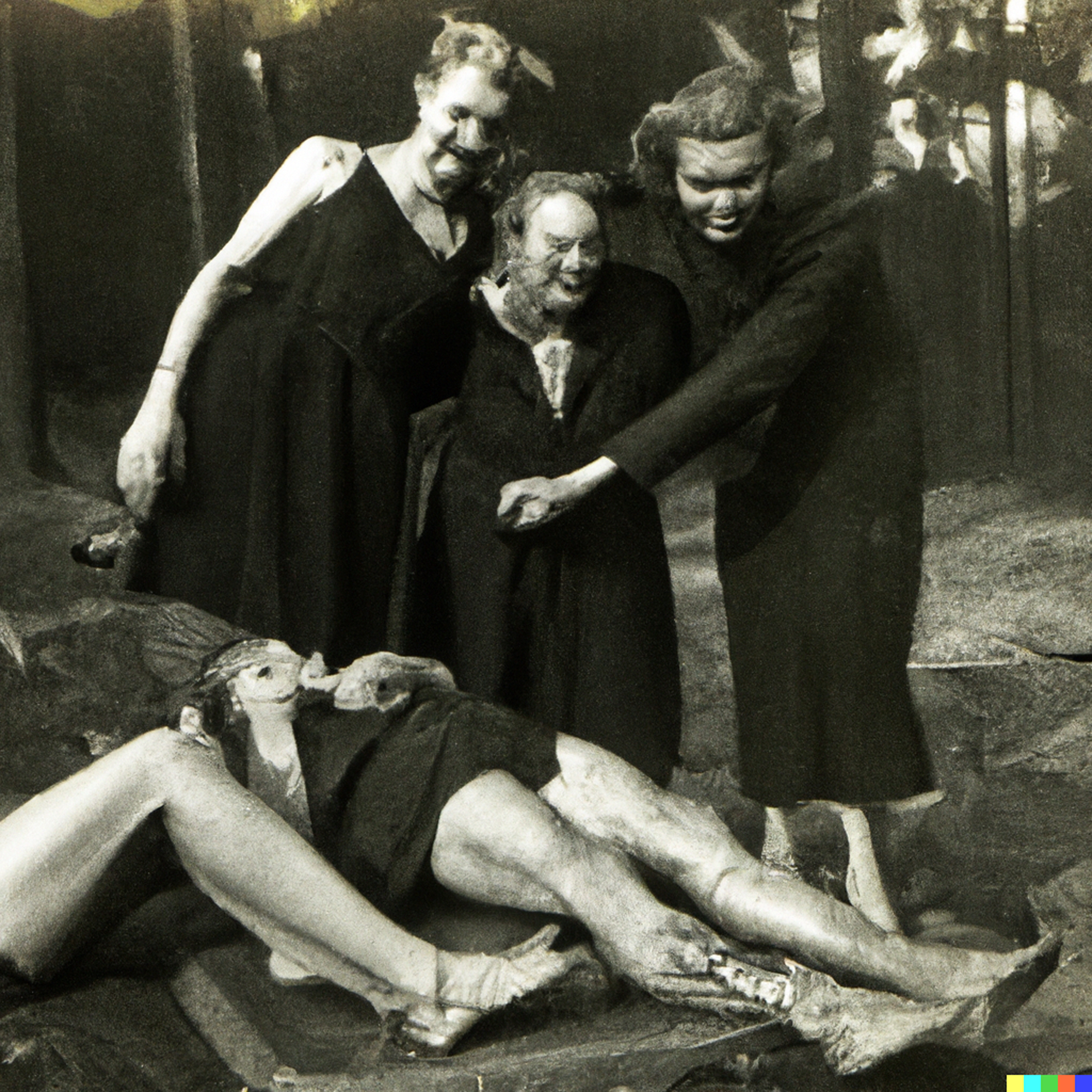
A work I feel was less successful. My first AI work. The title, concept, and some of the images were too challenging for many. Plus it was way too early. But that might change, as there is a growing interest in vintage AI works.