Alberto Sanseverino
A theatre designer who treats AI as a collaborator to be raised, not a tool to be used
Set designer, creative director, and startup founder
- Background
- Theatrical set design, event production, and immersive exhibitions across China since 2011
- Current Focus
- Six Characters in Search of an Algorithm, the Inventi startup, and commercial AI content creation
Executive Summary
Alberto Sanseverino bridges traditional theatrical design and AI-driven performance through a co-creation philosophy that positions AI as a genuine collaborative partner requiring training, evaluation, and mutual learning. His breakthrough work, Six Characters in Search of an Algorithm, reimagines Pirandello's 1921 metatheatrical drama for the age of artificial intelligence, holding a cultural mirror to contemporary human experience much as the original reflected the disruptions of the industrial revolution.
Working primarily in China since 2011, Alberto leverages Shanghai's experimental environment and governmental support for AI innovation to develop theatrical forms that would be difficult to realise within traditional Western production systems. His creative process demonstrates iterative co-creation through sustained dialogue across multiple platforms, with human cultural knowledge grounding every stage. When AI generated a depressed character who looked too polished, a Chinese colleague identified the disconnect immediately, and Alberto adjusted accordingly.
The co-creation is more powerful because we learn from each other. The machine brings capabilities I lack; I bring judgement and cultural knowledge it cannot access.
His Inventi startup pursues a dual strategy in which commercial AI video work provides financial sustainability while experimental IPs develop artistic innovations with future licensing potential. This balance, where commercial work funds creative risk-taking, sits at the centre of how he sustains his practice.
Pirandello in the Age of the Algorithm
The project began with a foundational question put to AI: if I do a drama, what kind of drama should I do? The initial response was generic and unsatisfying. The breakthrough came when Alberto recognised Pirandello's metatheatrical structure as an ideal vehicle. Characters speaking in disconnected ways, reflecting human crisis and societal fragmentation, mapped exactly onto contemporary experience.
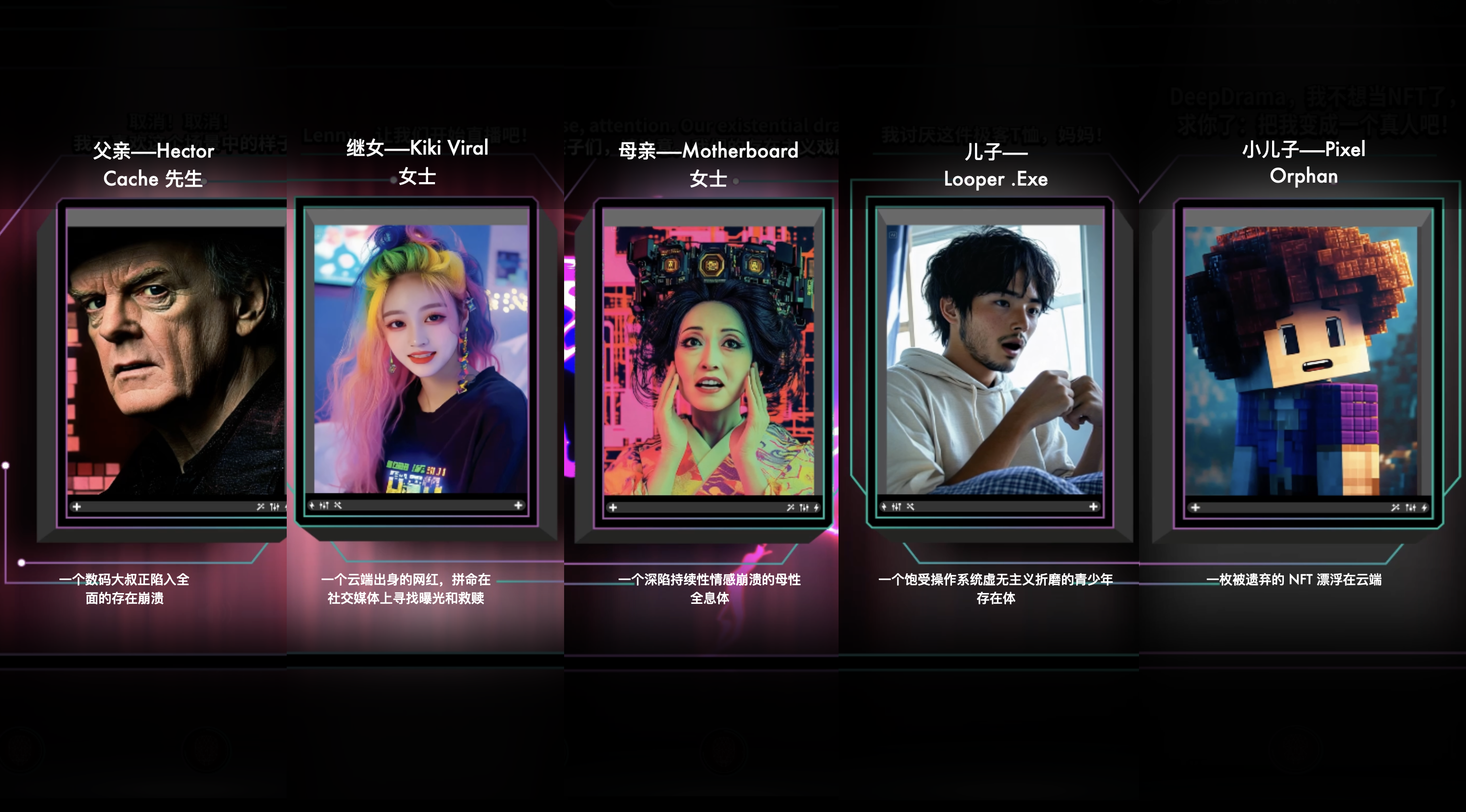
He asked DeepSeek to translate each original character into a contemporary equivalent linked to AI or new media. The Father became a figure reflecting contemporary cultural anxiety. The Mother transformed into Motherboard, embodying technological infrastructure. The abandoned child became an NFT, its value diminished after the cryptocurrency crash. Madame Pace, originally a brothel madam, became the founder of a dating app. What followed was not a single prompting session but a sustained iterative dialogue across months.
Cultural Knowledge as the Grounding Layer
Human cultural knowledge proved essential throughout the work. When the depressed son character, Luper X, was generated looking too handsome and polished, a Chinese colleague flagged the problem immediately. Audiences would not connect a glamorous appearance with someone withdrawn and isolated. Alberto adjusted the prompts based on this lived understanding. For the TikToker character, research into current trends, including rainbow hair colouring as a popular form of self-expression, produced a figure audiences could genuinely recognise.
Voice generation required the same kind of judgement. Madame Pace's initial businesswoman voice was technically correct but emotionally wrong. Alberto selected a male voice base and adjusted the tonality, producing an androgynous quality that better reflected the character. These micro-decisions, based on aesthetic and cultural reading rather than technical specification, are what distinguish compelling work from technically proficient but emotionally flat output.
Platform Choice as Creative Decision
Alberto's platform choices reflect both the Chinese creative context and deliberate strategic thinking. He selected DeepSeek for large language modelling, reasoning that a Chinese system might offer more culturally attuned responses for a drama featuring Asian-looking characters.
DeepSeek produces more natural, down-to-earth responses compared to ChatGPT's more objective, 'British' style.
For character psychology, this sensibility proved better suited to the project. Yuan, a Chinese image generation platform, offered bilingual prompt recognition, accepting English and Chinese seamlessly, and operates without the VPN access that international platforms require in China. These platforms are systems with distinct sensibilities and limitations. Platform selection became a creative decision shaping the final work's character as much as any aesthetic choice.
Constraint as Aesthetic Signature
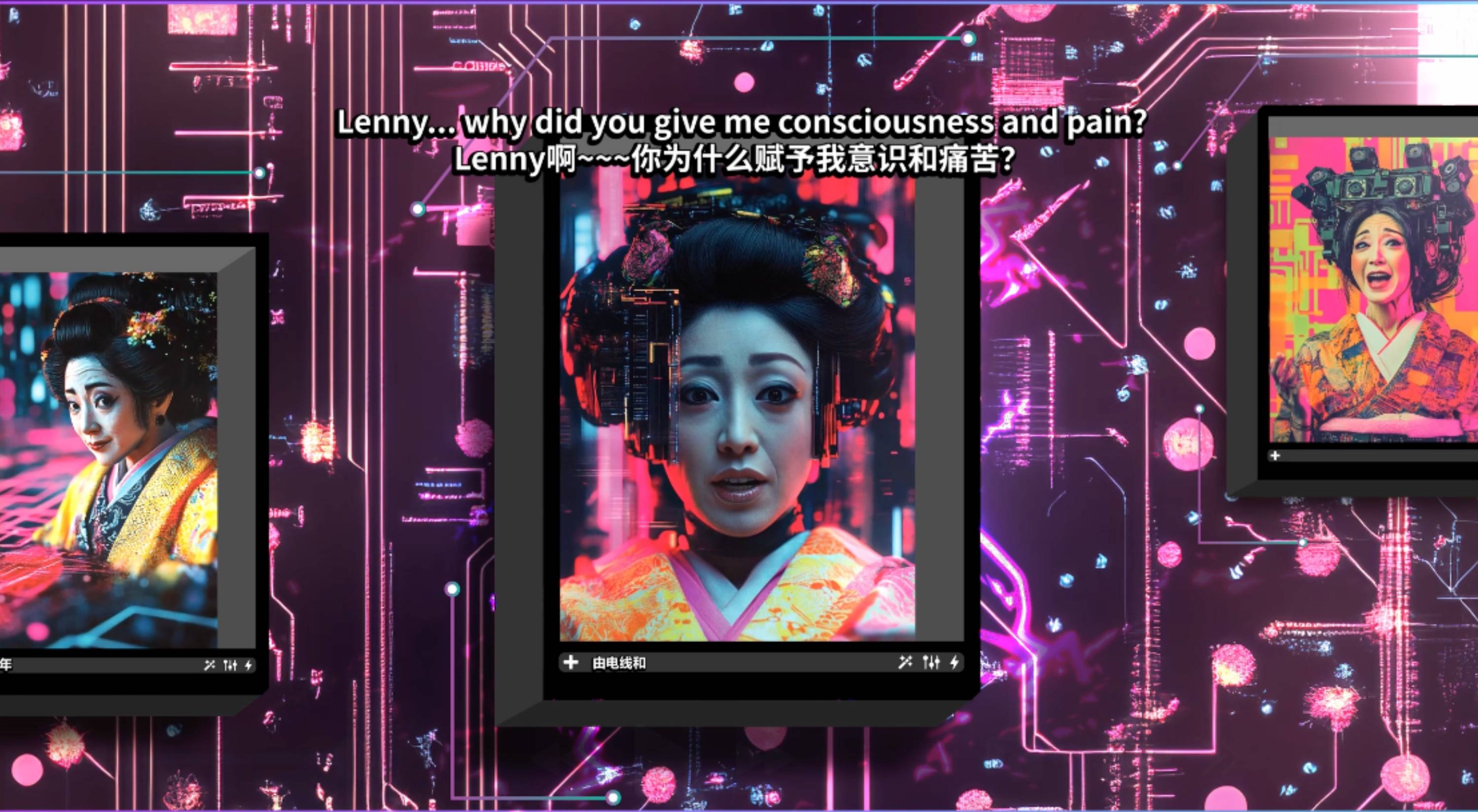
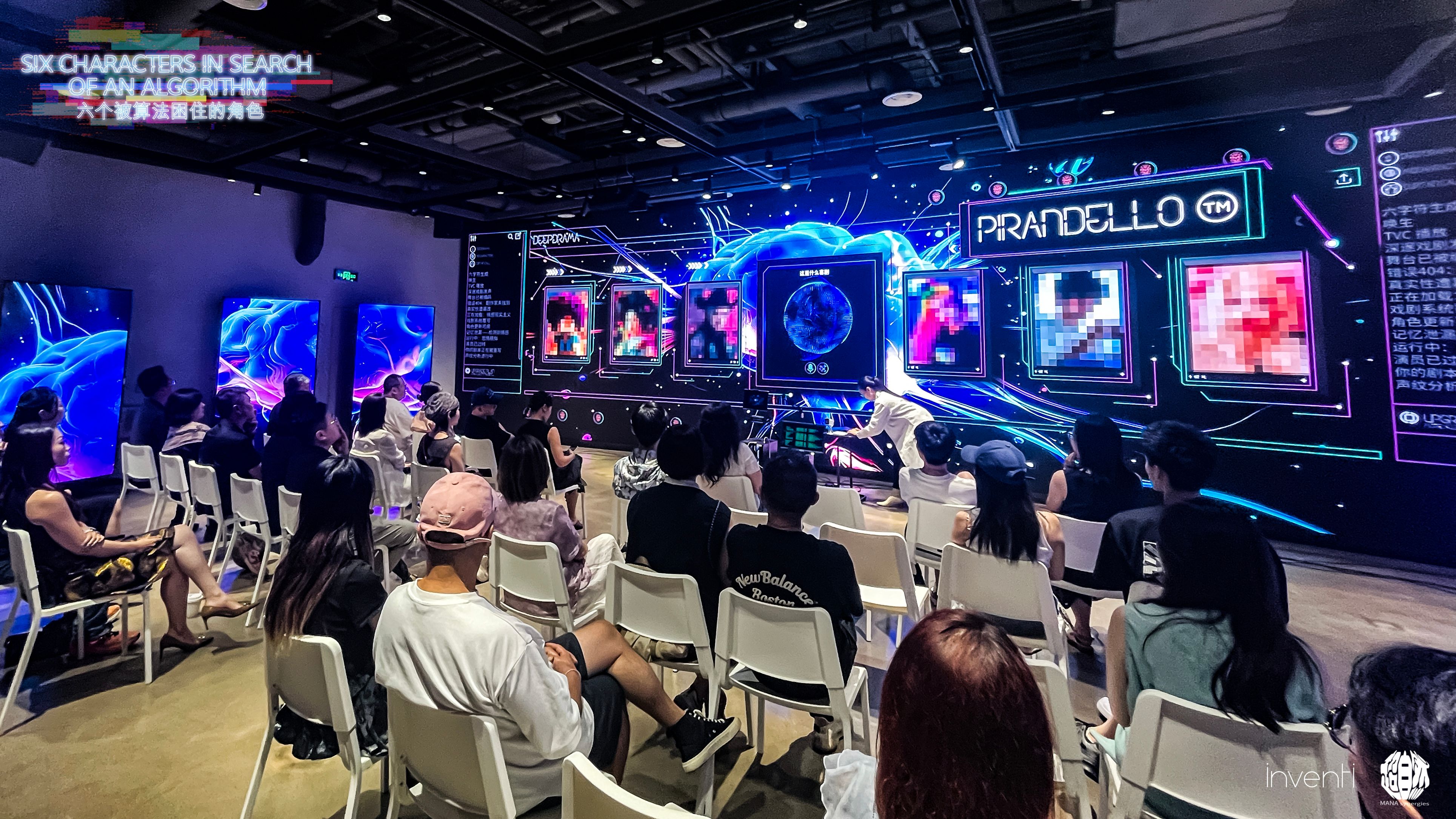
Kling struggled to animate multiple characters in a single frame. Two worked acceptably, but three or four together created significant difficulties. Alberto reconceptualised the presentation format. Since the entire drama takes place inside an AI world, the layout could resemble a generative AI interface, with each character appearing in a separate window. Characters could speak to one another without requiring unified multi-figure animation.
The technical constraint became a thematically appropriate aesthetic choice. The resulting visual language, with characters in separate windows like generative AI interfaces, became a defining signature making technological mediation explicit rather than concealing it. This transformation of limitation into strength exemplifies the creative problem-solving at the heart of his AI partnership.
Premiere and Generational Reception
The work premiered at a Shanghai venue across two nights and four shows, with carefully selected audience groups: traditional theatre professionals and festival organisers in their forties to sixties, and younger audiences from fashion, media, and social media worlds in their twenties and thirties.
Young audiences responded enthusiastically. The digital aesthetic matched their daily media consumption, the characters reflected their lived experience, and the ironic dialogue matched their everyday communication style. Traditional theatre professionals responded more cautiously. This generational divide reveals that acceptance of new creative forms depends less on objective quality than on cultural familiarity and openness to new aesthetics.
The performance ran in seventy per cent English and thirty per cent Chinese. AI-generated characters spoke English with Chinese subtitles, while one human actress, representing a traditional theatre troupe interrupted by the AI characters, performed live in Chinese. Interactive QR codes at specific dramatic moments invited audiences to engage directly with the AI co-creator.
Whether using AI or traditional theatre, the crucial element remains playing with emotions. If AI merely showcases things aesthetically, it's visualisation, not theatre.
Authorship and the Question of Co-Creation
Alberto credits Deep Drama, a fictional AI entity within the narrative, as co-creator of the work. This decision satisfies Chinese copyright law's requirement for demonstrated human contribution, and it generates more audience intrigue than a straightforward 'made with AI' framing. He is clear this is not merely strategic.
If we tell the project is done by an Italian guy with AI, it doesn't capture what makes this interesting. But if we frame it as co-creation, something more powerful emerges. We learn from each other, and together we create something neither could achieve alone.
The framing reflects a deeper conviction. The machine brings capabilities he lacks; he brings judgement and cultural knowledge the machine cannot access. Neither alone produces the work. The credit follows the reality of how the work is made.
Sustaining the Practice
Inventi's dual structure, in which commercial client work funds experimental IPs, provides the flexibility that large organisations cannot offer. Future projects include a full ninety-minute version of Six Characters, a presentation at an AI festival in Milan, and commercial AI video work for brands across cosmetics, automotive, and fashion.
His vision for ideal AI partnership reaches for a parenting metaphor.
I'd train it the way you raise a child, providing foundational values while allowing it to challenge and surprise you. Our own child challenges us but still carries the values we instil.
He is currently collaborating with different academies and private institutes in China to develop and train systems specifically focused on dramatic work creation. The ambition is to move beyond general-purpose platforms toward AI that genuinely understands theatrical structure and character psychology, an AI raised on the values of the form rather than borrowed for the occasion. It is a fitting next step for a practitioner whose entire approach treats AI as something to be brought up rather than picked up.
Selected Works