
Adam Cole
Artist, PhD candidate, Creative Computing Institute, UAL
- Background
- Software engineer turned artist; five years of generative AI practice
- Current Focus
- Queer experimental AI video art; open-source video generation; critical engagement with AI systems
Executive Summary
Adam Cole has a background in both software engineering and fine art, and that path shapes everything about how he works. His relationship to AI begins not with enthusiasm but with anxiety and grief over what it means for human creativity, for economics, for the safety of artists. He has spent five years building one of the most technically rigorous and politically committed AI art practices in this study.
His work is queer experimental AI video art, a deliberate positioning against the normative defaults he finds embedded in generative systems. Commercial tools impose content restrictions that make it difficult to explore the themes central to his practice; he hits a content filter within minutes of trying anything he finds interesting. He works almost exclusively with open-source tools, builds his own pipelines, and never presents raw AI outputs as finished work.
Cole sees AI not as a collaborator but as a complex statistical system to be understood and navigated.
I often feel like I'm fighting a math equation to get the right generative results.
But this is not a cold or purely technical relationship. It involves genuine curiosity, iterative learning, and moments of real surprise. There is a distribution of possibilities he is blind to, and the only way to understand what a system is capable of is by experimenting with it, mapping the landscape, and then finding the exact point that produces the result he wants.
He holds a clear-eyed view of AI's broader cultural implications and considers it part of his generation's responsibility to engage deeply enough to shape what comes next, building alternative infrastructures, developing new aesthetic sensibilities, and making work that reveals rather than conceals the systems it employs.
Creative Practice and Queer Intervention
Cole's practice begins from a specific political and aesthetic commitment: to make work that challenges the normative defaults of mainstream AI systems. He draws inspiration from queer underground filmmakers of the 1950s and 60s, who created compelling work within highly restrictive media environments, operating in a context where queer representation in film was effectively prohibited. He sees a direct parallel today.
"There really are opportunities for an underground or an avant-garde that works alongside" the dominant commercial AI landscape.
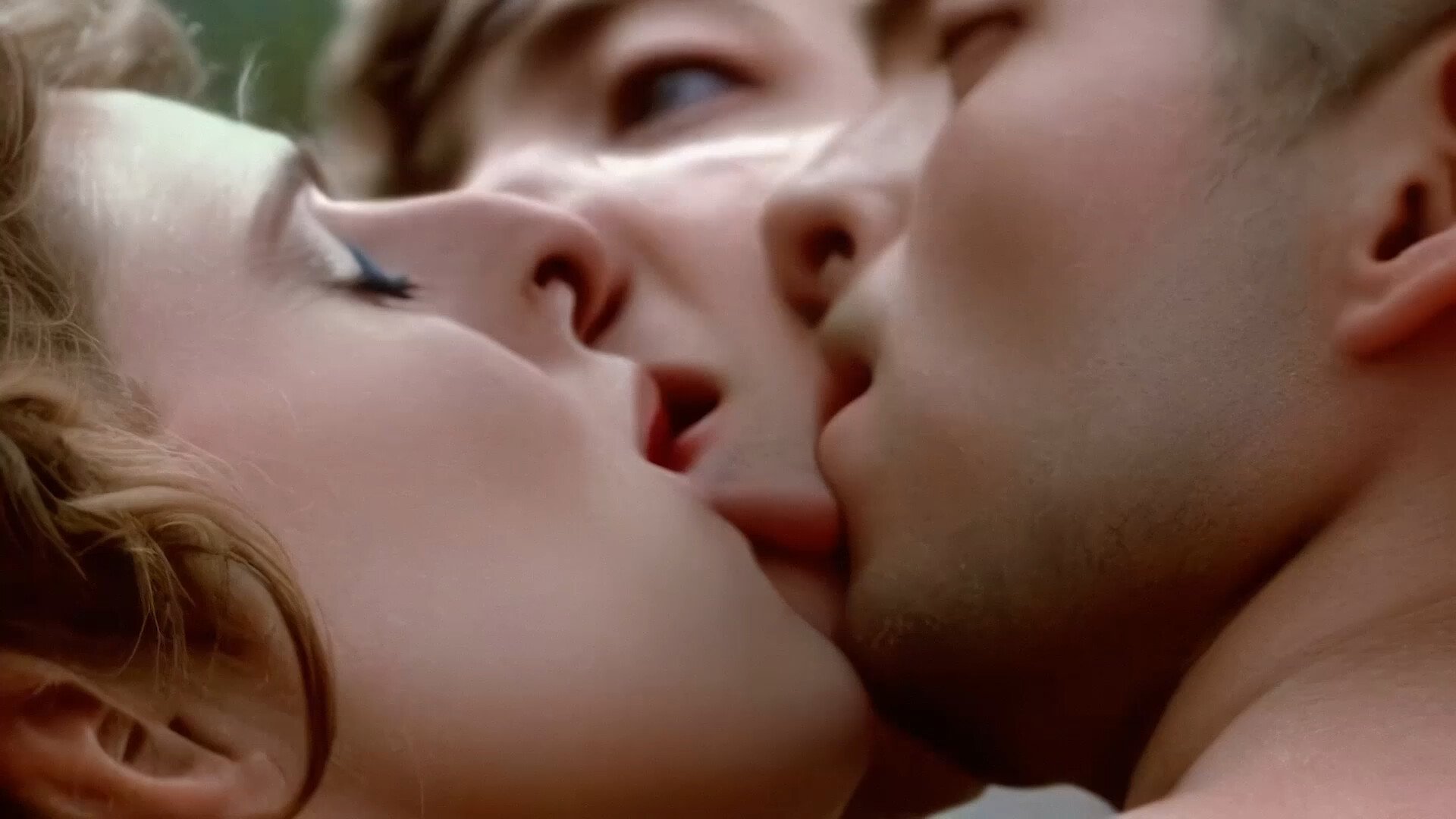
The kiss features prominently in his work. He describes it as the quintessential cinematic image, one that lives in all of us through decades of film consumption, where fantasy and lived experience corrupt and elevate each other simultaneously. That tension, between invented fantasy and actual experience, is where he locates the challenge of art itself.
Technical Process: Video-to-Video Translation
Cole works primarily with open-source video models via ComfyUI or his own custom toolset, strongly preferring video-to-video translation over text-to-video. Text-to-video is too loose, offering no meaningful control. Video-to-video gives him not just compositional control but an interesting relationship between the original material and its recreation.
His process is iterative and research-driven. A first version of a work is primarily about understanding what a tool can do, giving up some agency to map the landscape. The second pass is more precise, pushing toward a specific end goal now that the possibilities are understood.
Nothing emerges finished from the AI. There is a lot of making material, and then the harder work begins: editing it into something more interesting. He also extracts elements from within the generative process itself, such as depth maps not intended to be seen, and incorporates them as aesthetic material.
I found they were quite beautiful and surprisingly aesthetic. So we extracted those as part of the final work, to visualise something that happens inside the system.
Relationship with AI: Understanding the System
Cole positions himself clearly toward the technical end of the spectrum. He sees models as statistical generative systems rather than creative collaborators, and his practice involves developing a deep understanding of a model's distribution of outputs, then navigating that space with increasing precision.
He acknowledges genuine learning and surprise along the way, but frames it as one-directional: he is trying to understand the machine; the machine is not trying to understand him. He builds his own technical pipelines as a way of maintaining authorship and originality, which feels increasingly important as these tools already seem capable of doing everything.
The process of sustained attention and engagement is itself something he values.
That attention to the work is also an affection for the work. And if you skip that middle part, you just are less connected to it.
Open Source, Bias, and the Content Landscape
Cole's commitment to open-source tools is both technical and thematic. He approaches the question of AI bias with nuance, treating the cultural inflections of different models as aesthetic characteristics rather than simply as flaws. There is no such thing as an unbiased model; every culture has a view of reality reflected back through the representations it elevates. He treats this as flavour rather than limitation.
He is candid about the challenges within open-source communities, where the absence of moderation can create difficult dynamics, and sees this as a structural problem worth taking seriously.
Broader Cultural Concerns
Cole holds a considered view of AI's wider implications. The proliferation of AI video will be so totalising, he believes, that it will reconstruct relationships to each other, to the self, and to reality itself. He is concerned about corporate concentration in AI infrastructure and the risk that algorithmically optimised content pipelines will marginalise everyday creators.
He pushes back on the reassuring narrative that society simply adjusted to photography.
Photography completely upended society and transformed our entire relationship to reality and our understanding of the world. We would not recognise the world before cameras. And I think that should be worrying.
Not as a counsel of despair, but as a reason to engage actively. Without that engagement, the new sensibility gets forfeited to someone else who will probably do a less interesting job.